Jun Rekimoto
Senior Fellow
On April 27, 2026, the “Expertise Science and Technology (ExScite)” workshop was held at FabCafe Kyoto as the kickoff event for an international collaborative research project. The workshop focused on the extraction, transfer, enhancement, and fundamental understanding of human skills.
This workshop was organized as the kickoff event of the JST ASPIRE research project, “International Research Consortium for Skill Transfer, Limit Extension, and Mechanism Elucidation” (Project Number: JPMJAP2503), led by Dr. Shinichi Furuya, Senior Researcher. The project aims to develop technologies for measuring, analyzing, and transferring skills across diverse domains such as music, traditional culture, and healthcare, while also uncovering the neural and bodily mechanisms underlying skill acquisition. The workshop also proposed the development of an interdisciplinary research platform, recognizing that skill research spans engineering, neuroscience, the humanities and social sciences. Taking advantage of the presence of international researchers visiting Japan for the Neural Control of Movement (NCM) conference in Kobe, the workshop marked an important first step toward building a global research network.
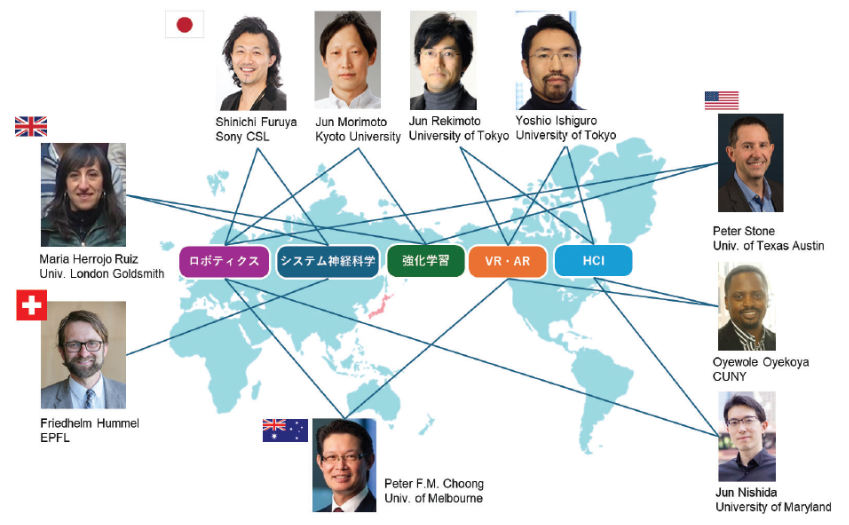
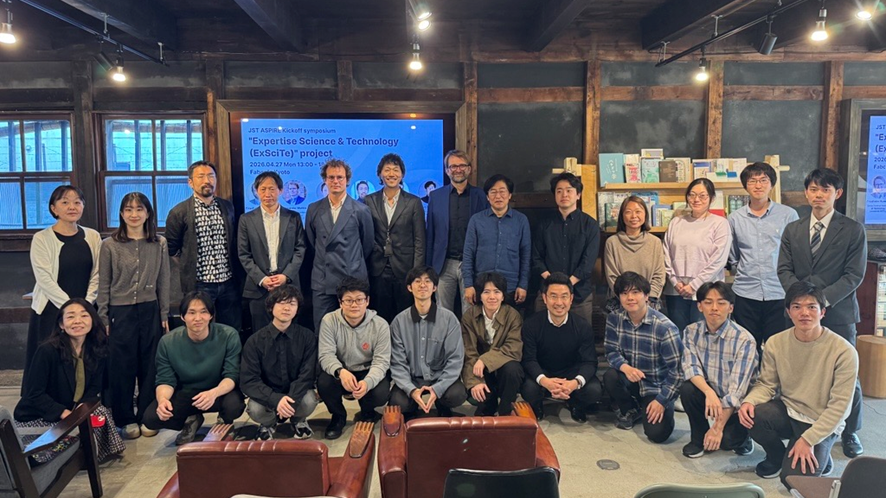
The workshop featured six speakers:
• Dr. Friedhelm Hummel (EPFL, Switzerland)
• Dr. Alexander Mathis (EPFL, Switzerland)
• Prof. Jun Morimoto (Kyoto University / ATR)
• Prof. Yoshio Ishiguro (The University of Tokyo)
• Dr. Jun Rekimoto (Sony Computer Science Laboratories, Senior Fellow)
• Dr. Shinichi Furuya (Sony Computer Science Laboratories, Research Director)
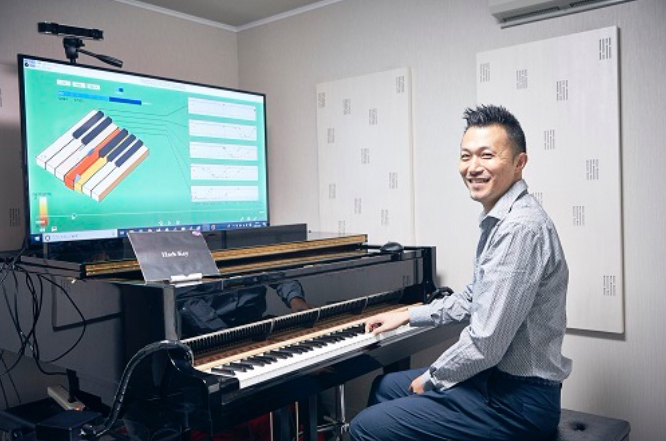
Dr. Furuya opened the workshop by introducing the background of the project and his research on the scientific understanding of physical skills. He highlighted challenges such as the difficulty of verbalizing skills and the phenomenon of learning plateaus. By integrating neuroscience with AI and robotics, his research aims to clarify the structure of skills and enable personalized learning support and advanced methods for skill transfer. He also presented examples of data acquisition and educational applications in piano performance, demonstrating pathways toward social implementation in music education and training.
Next, Prof. Ishiguro presented research on skill recording and transfer using eye-tracking, 3D environmental sensing, and mobile platforms. By continuously capturing behavior in everyday environments and integrating multimodal sensor data, his work proposes new approaches for visualizing and transmitting skills, as well as supporting education and training.
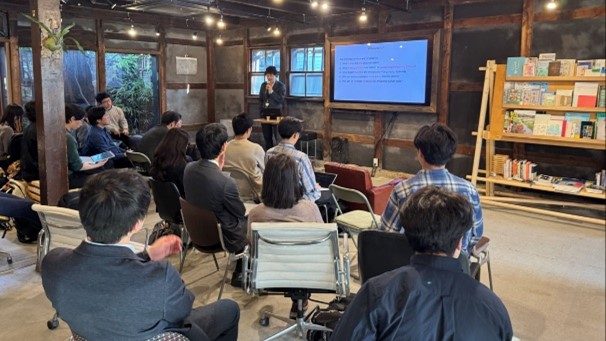
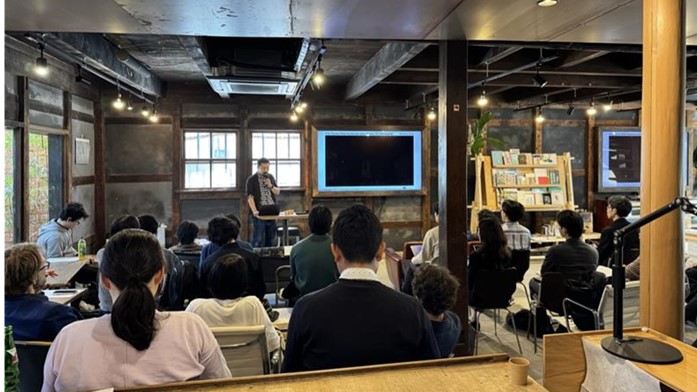
Dr. Jun Rekimoto then introduced research utilizing multimodal data such as gaze information and first-person-view video. His work focuses on enabling AI to understand and model human actions and intentions in order to support skill transfer. Through examples in domains such as cooking and tea ceremony, he demonstrated how AI can abstract and visualize the structure of actions while providing context-aware, real-time guidance through a “companion AI” that supports the learning process.
Dr. Mathis presented research on learning and reproducing physical skills in simulation using reinforcement learning and imitation learning. He emphasized that acquiring complex motor skills requires not only optimization, but also staged learning designs inspired by human learning processes. He also discussed the potential of “digital twins” that reproduce human behavior and bodily dynamics, enabling deeper insights into brain function and motor control.
Prof. Morimoto discussed research on robotic skill acquisition and human physical assistance using reinforcement and imitation learning. By training robots on human motion data and applying exoskeleton technology, his work explores the reproduction and augmentation of complex movements such as skateboarding and tennis. He also highlighted the potential for mutual adaptation between humans and robots, as well as applications in assistive technologies for aging societies.
Finally, Dr. Hummel presented research on enhancing learning and rehabilitation using non-invasive brain stimulation technologies. He emphasized personalized interventions based on a network-based understanding of the brain, as well as the importance of tailoring stimulation and training according to different stages of learning. Discussions also highlighted that effective learning environments should include not only efficiency, but also appropriate “friction” and opportunities for active trial and error.
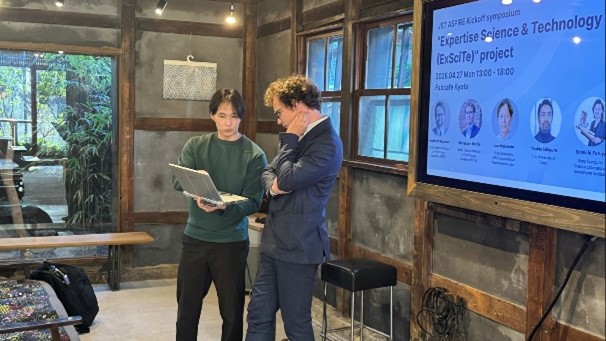
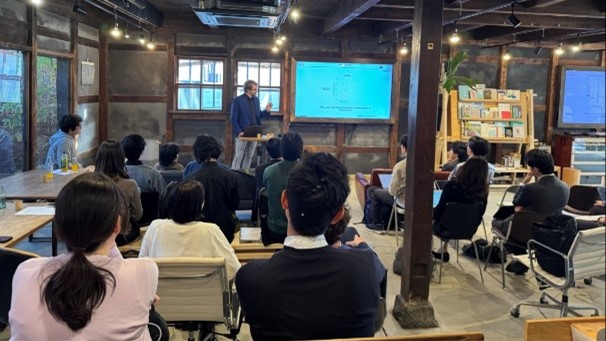
Throughout the workshop, lively discussions took place from international and interdisciplinary perspectives on AI-, robotics-, and neuroscience-based approaches to overcoming the limits of skill learning. Participants deepened their understanding of the interactions among cognition, bodily movement, and the environment that support skill acquisition, while also sharing a vision in which humans and AI collaboratively expand human capabilities. Active exchanges continued during Q&A sessions, breaks, and even after the event.
By bringing together researchers from Japan and abroad and fostering cross-disciplinary dialogue, the workshop created concrete opportunities for future international collaborations. It marked an important starting point for the ASPIRE project and a significant step toward advancing research and building a global research community.
Senior Fellow
Tokyo / Kyoto
I want to take humanity to a more natural world - Jun Rekimoto
Shinichi Furuya
Designing a Feedback Loop Between a Human and Their AI Clones for Science Communication in Museums