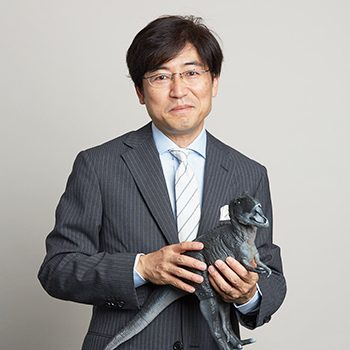
Jun Rekimoto
Senior Fellow
Zhang, Qing and Huang, Yifei and Lee, Juyoung and Starner, Thad and Rekimoto, Jun
Diego Calvanese
As generative AI makes polished prose cheap to produce, users can no longer rely on fluency as a proxy for truth. We call this failure mode the Fluency Trap: users trust fluent hallucinations while also discounting accurate content once it is disclosed as AI-generated. Binary “Made with AI” labels respond with authorship disclosure, but they do not show what supports a claim. We propose Provenance Density, an evidence-visualization interface that shows the density of verified claims in a text. In a user study with 81 participants, an idealized Provenance Density interface produced a large discernment gap between truth and fabrication (+4.15 points, d = 1.82), whereas participants given no signal showed no detectable discrimination. A technical audit with 200 samples shows that retrieval density alone is insufficient; unexpectedly, the Consistency Veto carries most of the discriminative signal on dynamic queries. As AI-generated content becomes indistinguishable from human writing, effective transparency must move from authorship disclosure toward evidence visualization.
Senior Fellow