Challenging the Limits of Information Extraction from Data
Takashi Isozaki
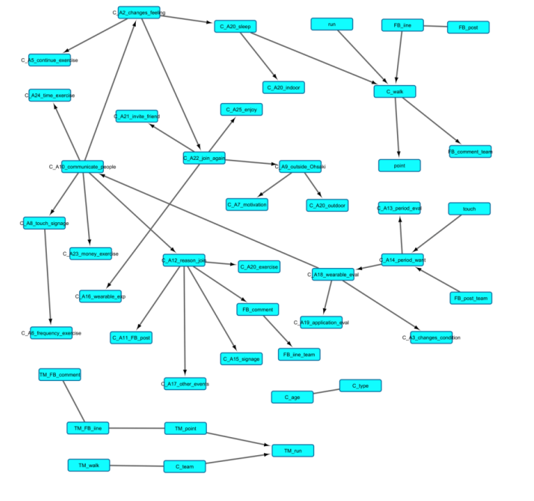
We are now using more data than ever before, and this usage is sure to go on increasing in the future. Many examples of mass-data can be listed, such as data related to geoenvironmental assessments, gene expressions, and buying history. It is easy to imagine that success in utilizing such data would have a great influence on the future of humanity. However, humankind does not currently have the ability to fully extract information from data, which I believe is a major problem. I have addressed this problem by treating data that have many variables dependent on each other using probabilistic graphical models and methodologies of physics.
Takashi Isozaki
"If you want to accomplish in your life, one thing that would contribute to the future of humanity - what is that?" How do researchers at Sony CSL reflect on these questions and engage with their own research? And what kind of place is Sony Computer Science Laboratories, shaped by such individuals? Through the words of the researchers themselves, we hope to share part of that perspective.
A big Data Analysis Tool
Takashi Isozaki and Manabu Kuroki,
Learning Causal Graphs with Latent Confounders in Weak Faithfulness ViolationsNew Generation Computing, | Vol.35, , pages 29-45, , 2017
Masatoshi Funabashi, Peter Hanappe, Takashi Isozaki, AnneMarie Maes, Takahiro Sasaki, Luc Steels and Kaoru Yoshida,
Foundation of CS-DC e-Laboratory: Open Systems Exploration for Ecosystems Leveraging,First Complex Systems Digital Campus World E-Conference 2015, | pages 351-374, , 2017
Takashi Isozaki,
A Robust Causal Discovery Algorithm against Faithfulness ViolationTrans. of the Japanese Society for Artificial Intelligence, | Vol.29, , pages 137-147, , 2014
The use of causal inference with structural models in industry
Practically effective adjustment variable selection in causal inference